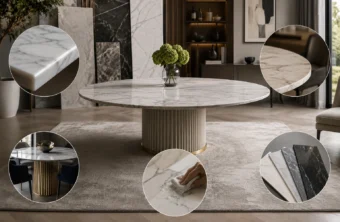
Since marble is a natural material, its quality cannot always be judged by price alone. However, with a few simple observations, you can easily distinguish high-quality marble from lower-grade options.
Here are 3 key tips that will help you make the right choice:
1. Learn the Difference Between “Fissures” and “Cracks”
One of the most important quality indicators in marble is surface structure.
- Fissures:
These are natural micro-lines formed during the stone’s geological creation. They do not affect durability and are considered part of the stone’s character.
- Cracks:
These are deep, open breaks that you can feel by touch. They weaken the structure and reduce durability.
👉 Always avoid visible structural cracks, but do not confuse natural fissures with damage.
2. Perform the Sound Test
Sound can reveal a lot about marble density.
- Tap the surface lightly with a coin or key
- Clear, solid sound: High density and strong structure
- Hollow or dull sound: Internal voids or weak structure
High-quality marble typically produces a firm, resonant tone.
3. Try the Water Drop Test
Water absorption is a key indicator of surface quality.
- Place a few drops of water on the surface
- High-quality marble: Water stays on the surface for several minutes before slowly absorbing
- Low-quality marble: Water absorbs quickly and leaves a dark stain
This test shows how well the stone is polished and how porous it is.
⭐ Bonus: Check Color Consistency and Craftsmanship
A few additional quality signals:
- Slight natural tone variations are normal
- Excessive discoloration or yellow stains may indicate impurities
- Edges should be smooth, precise, and professionally finished
- No chipping or rough cutting marks should be visible
Good craftsmanship is just as important as the stone itself.
💰 Price and Origin Matter Too
While not the only factor, they can be indicators of quality:
- Extremely low prices often mean lower density or second-grade material
- Well-known marble origins (such as Turkey, Italy, and Greece) are generally associated with higher quality
- Always request certificates or origin documentation when possible
🏁 Final Thoughts
Choosing high-quality marble is about understanding the stone, not just looking at it. By applying these simple tests, checking fissures, listening to sound, and observing water absorption, you can make a much more informed decision.
High-quality marble is not just a material; it is a long-term investment in durability, beauty, and timeless design.